Every flat in Bangalore is sold with two sizes. One is on the brochure, the hoarding and the price list: the super built-up area, often called saleable. The other is on the Karnataka RERA filing and in your agreement for sale: the carpet area. They describe the same flat, and they are never the same number.
Most explanations stop at the definitions. This one doesn’t, because the definitions aren’t the problem. The problem is that the gap between the two numbers isn’t fixed. Across real units measured off their filings, carpet runs from 54% to 71% of the advertised figure. Two flats sold at the same size can differ by 32% in the floor you actually get, and the brochure gives you no way to tell which is which.
One flat, three numbers
Carpet area is the floor you can put furniture on. RERA defines it, in Section 2(k) of the Real Estate (Regulation and Development) Act, 2016, as the net usable floor area of a flat: it excludes the external walls, service shafts and any exclusive balcony, verandah or open terrace, and includes the internal partition walls. It is the figure the filing lists for every unit type, and the one your agreement for sale has to state.
Built-up area adds the walls and, depending on who is measuring, the balcony. It has no single legal definition, which is why one developer’s built-up is another developer’s saleable.
Super built-up area adds a proportionate share of everything you don’t live in: lift lobbies, staircases, corridors, the lift and service cores, the clubhouse. How much gets added is the developer’s call. That share is the loading, and it is the reason the gap between carpet and super built-up moves from one project to the next.
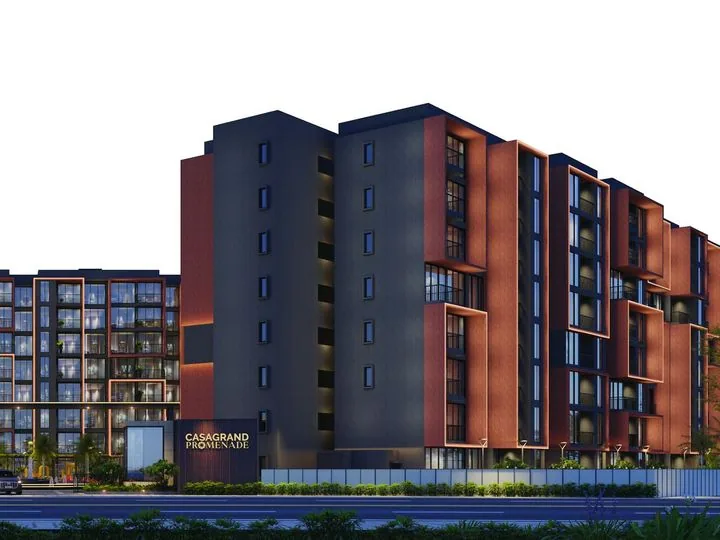
Watch for hybrids too. Some sheets add the balcony back and call the result “total carpet”. That can be a useful number, but it isn’t RERA carpet and it doesn’t compare with one. Casagrand Promenade’s page sets carpet, balcony and saleable out side by side for each unit type, which is the clearest way to see all three at once.
Real flats, measured
The table takes real flat types from Bangalore projects. Carpet is off each project’s Karnataka RERA filing. Saleable is the developer’s own figure for the same unit, from its plan sheet or price list, because the filing doesn’t carry super built-up at all. Each row is one flat type, sorted from the least carpet per advertised foot to the most.
| Project | Unit | Carpet · RERA | Saleable · developer | Carpet share | Saleable adds |
|---|---|---|---|---|---|
| DS-MAX Sky Fields | 2 BHK | 647 sq ft | 1,201 sq ft | 54% | +86% |
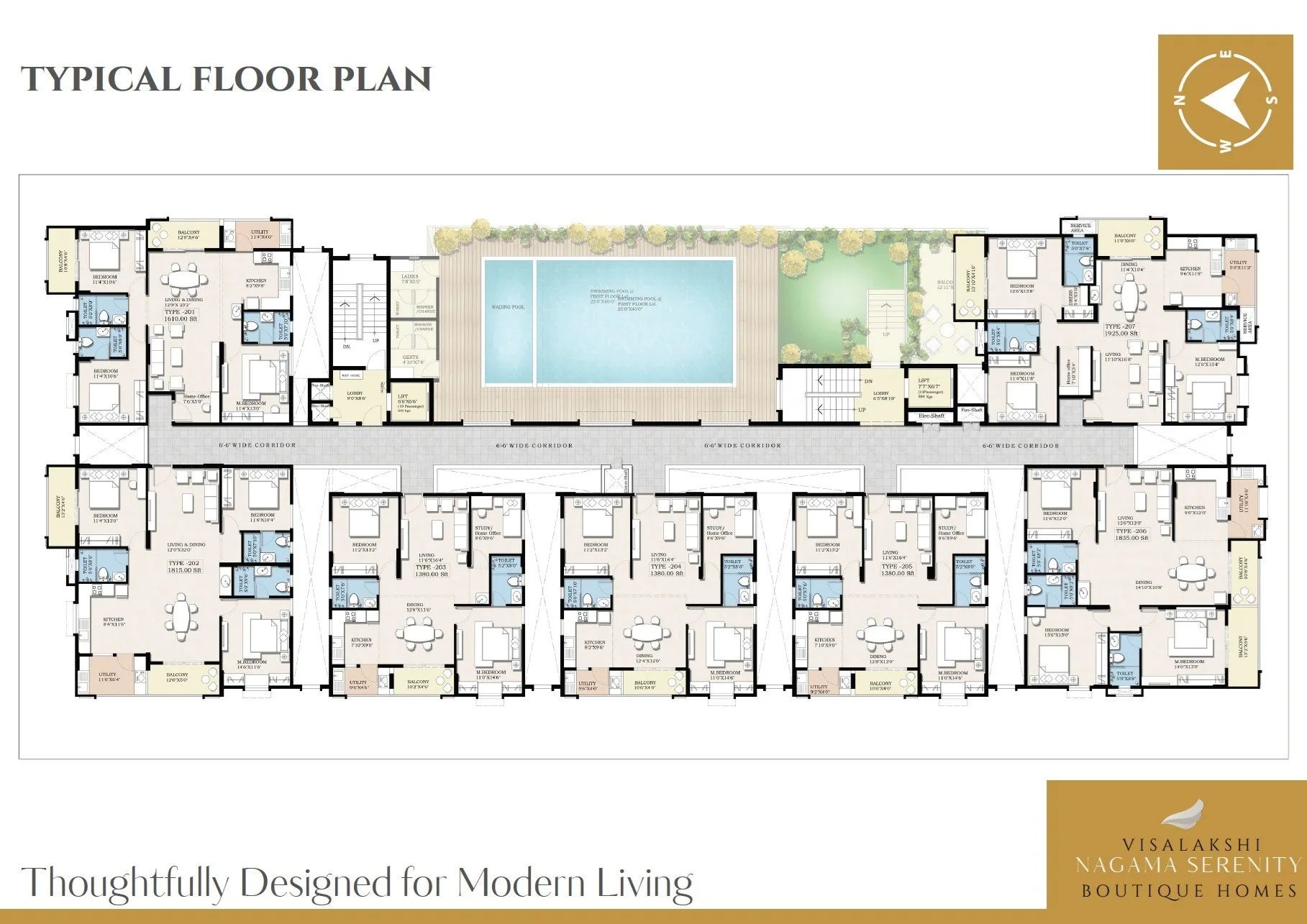
| Nagama Serenity | Type 201 3 BHK | 906 sq ft | 1,610 sq ft | 56% | +78% |
| DS-MAX Sky Fields | 3 BHK | 1,023 sq ft | 1,738 sq ft | 59% | +70% |
| Udbhav Gokulam | 3 BHK | 1,112 sq ft | 1,830 sq ft | 61% | +65% |
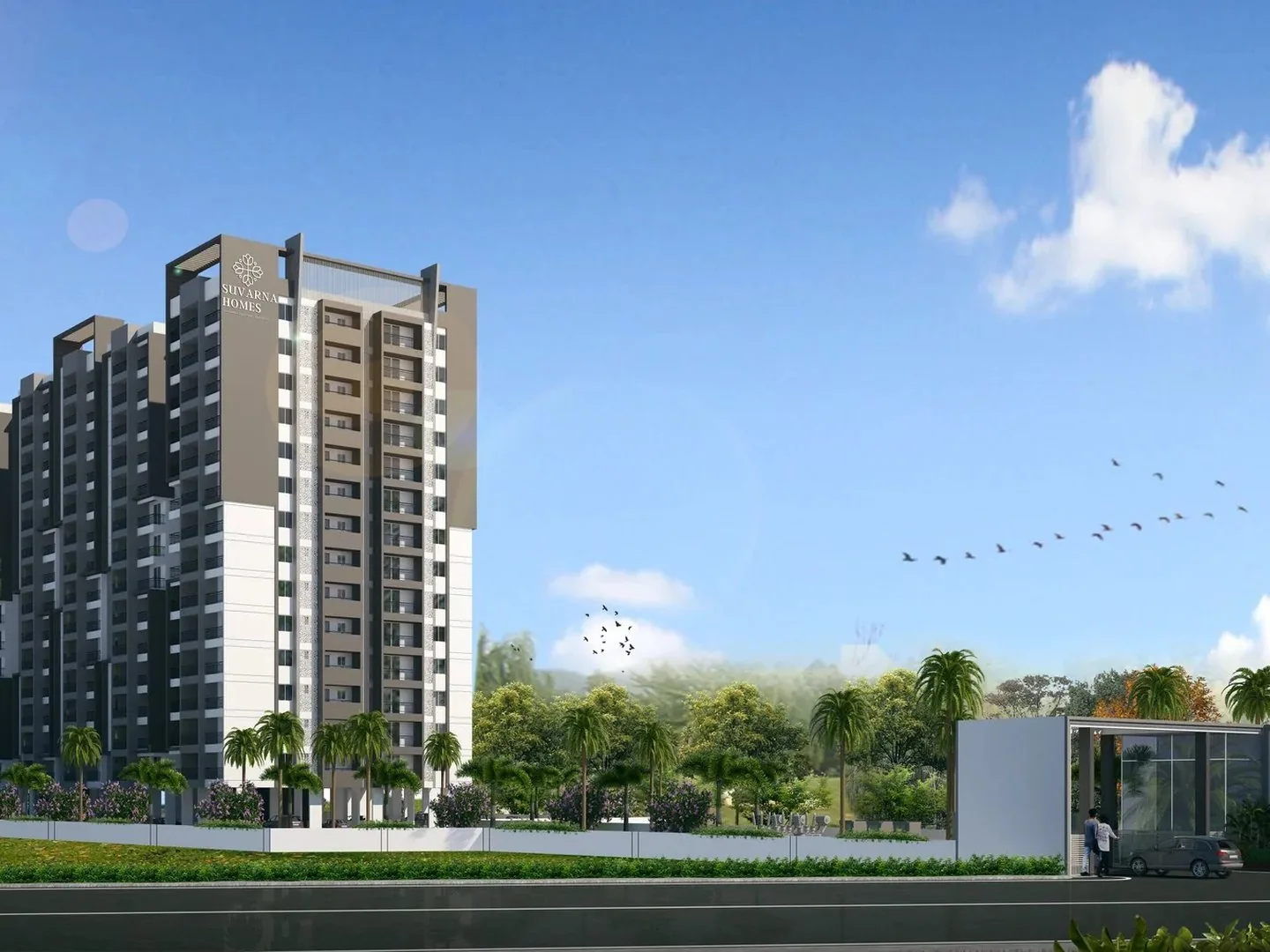
| Suvarna Homes | A-01 3 BHK | 1,203 sq ft | 1,948 sq ft | 62% | +62% |
| Suvarna Homes | A-03 3 BHK | 1,029 sq ft | 1,645 sq ft | 63% | +60% |
| Udbhav Gokulam | 2 BHK | 723 sq ft | 1,150 sq ft | 63% | +59% |
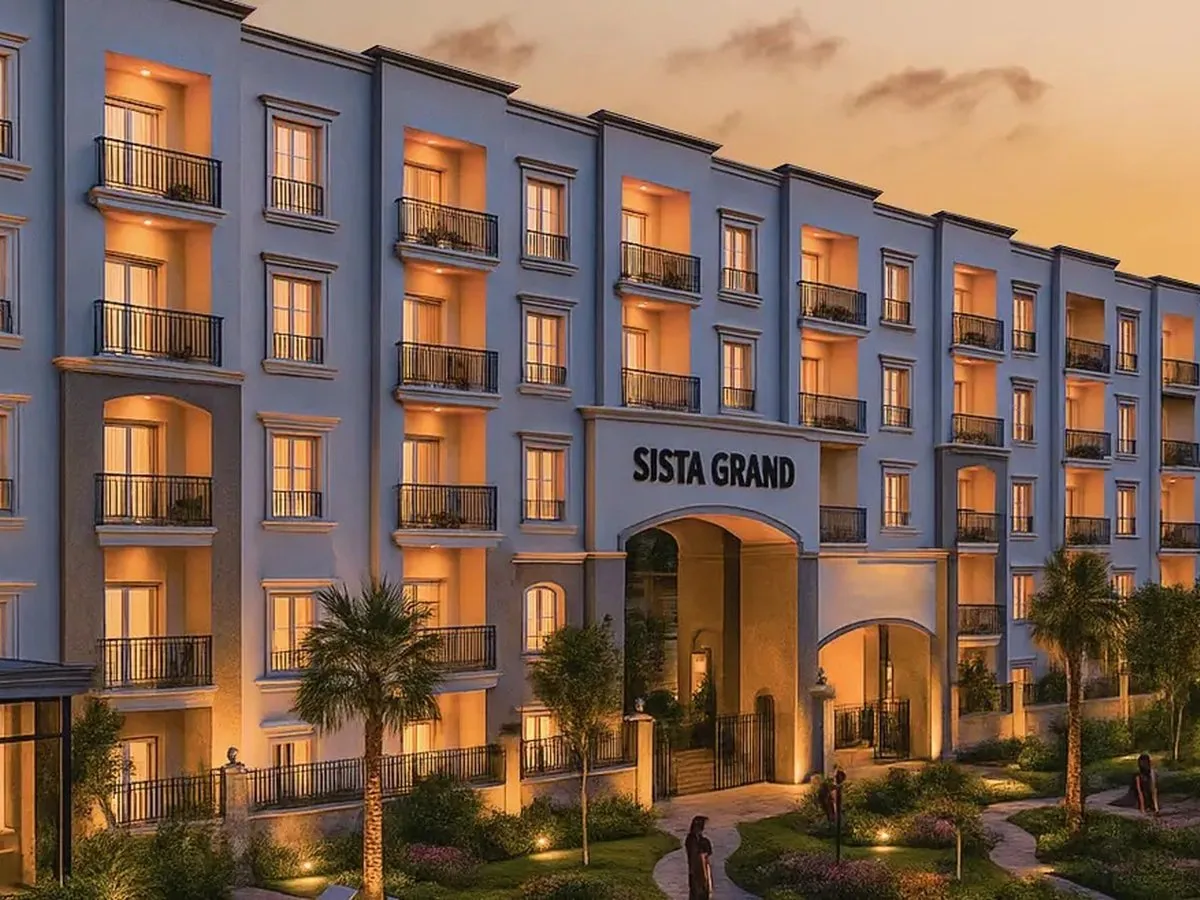
| DS-MAX Sista Grand | 4 BHK | 1,279 sq ft | 1,928 sq ft | 66% | +51% |
| Nagama Serenity | Type 202 3 BHK | 1,205 sq ft | 1,815 sq ft | 66% | +51% |
| Surya Valencia | Phase II 4 BHK villa | 2,213 sq ft | 3,122 sq ft | 71% | +41% |
Carpet share is carpet divided by saleable. “Saleable adds” is the loading: how much bigger the advertised figure is than the carpet. Filings read September 2026.
The spread runs from 54% for the 2 BHK at DS-MAX Sky Fields to 71% for the Phase II 4 BHK villa at Surya Valencia, with the middle of the list at 62%. Put the other way round: at one end the advertised figure is 86% bigger than the floor you get, and at the other it is 41% bigger.
Run the same advertised 1,200 sq ft through both ends of that range and you get about 650 sq ft of carpet at one and 850 sq ft at the other. That is not a rounding difference. It is a room.
What the gap does to the price
Developers quote a rate per square foot on the saleable figure. It is the bigger number, so it makes the rate look smaller. Divide the same price by carpet instead and you see what you are paying for floor you can use.
DS-MAX Sky Fields sells its 2 BHK from ₹92.47 lakh, advertised at 1,201 sq ft. That is ₹7,700 a square foot, as quoted. The filing gives the same flat 647 sq ft of carpet, which is 54% of the advertised figure. ₹92.47 lakh over 647 sq ft comes to ₹14,300 per carpet foot.
Neither number is wrong; they measure different things. But only one of them is the floor you will live on.
Here is the same arithmetic on every unit in the table where the developer publishes a price for that exact flat.
| Project | Unit | Price | Per saleable ft | Per carpet ft |
|---|---|---|---|---|
| DS-MAX Sky Fields | 2 BHK | ₹92.47 lakh | ₹7,700 | ₹14,300 |
| Nagama Serenity | Type 201 3 BHK | ₹1.48 Cr | ₹9,200 | ₹16,300 |
| Nagama Serenity | Type 202 3 BHK | ₹1.67 Cr | ₹9,200 | ₹13,900 |
| DS-MAX Sista Grand | 4 BHK | ₹1.92 Cr | ₹10,000 | ₹15,000 |
Prices are the developers’ published opening figures for each unit type. Units without a developer-published price for that exact flat are left out, including any whose only prices come from listing portals.
Sort them by the rate the brochure quotes and the 2 BHK at DS-MAX Sky Fields is the cheapest, at ₹7,700 a foot. Sort them by carpet and it is not: the Type 202 3 BHK at Nagama Serenity comes out cheaper, at ₹13,900 a carpet foot against ₹14,300. Which flat looks like the better deal depends on the number you divide by.
It happens inside a single building too. At Nagama Serenity, the Type 201 3 BHK and the Type 202 3 BHK are priced within ₹10 a foot of each other on saleable area. Per carpet foot they are ₹16,300 and ₹13,900: 18% apart, for two homes the price list treats as the same rate.
Two flats, same size on the brochure
The 2 BHK at Udbhav Gokulam is advertised at 1,150 sq ft; the 2 BHK at DS-MAX Sky Fields at 1,201 sq ft. On the filings, the one that sounds smaller has 723 sq ft of carpet and the other 647 sq ft: 76 sq ft, or 12%, more floor in the flat that looks smaller on paper.
This is the comparison buyers actually make, usually without realising it: two flats of the same type, advertised at roughly the same size. On the brochure they look like the same product. On the filing, one of them is simply bigger, and a bigger advertised number can buy you more loading rather than more floor.
It is also why a per-foot rate on its own tells you so little. A lower rate on a heavily loaded flat can cost you more for every square foot you actually use than a higher rate on a lightly loaded one.
Why the loading differs between projects
Nothing in RERA caps the loading. What the Act did was make carpet the number that has to be filed and written into your agreement. Super built-up survived as a marketing figure: still quoted and still legal, but not the measure your agreement is written in.
What drives the loading is what gets shared, and how generously the developer counts it. It is tempting to read it off the building type, and our list shows why you can’t. Surya Valencia’s row villas come out near 70%: a villa has no lift lobby, corridor or tower core to share. But Nagama Serenity, a single nine-floor tower of 63 homes, comes out at 56% on one unit type and 66% on the other, ten points apart in the same building. And Suvarna Homes, two 13-floor towers with a basement and a clubhouse, sits at roughly 62% on every A-block unit the developer has published.
The practical point is that you cannot infer the loading from the building type, the price or the developer’s reputation. You have to ask for the carpet figure and do the division yourself. The filing lists carpet for every unit type, and our guide to reading a Karnataka RERA filing shows where to find it.
How to compare on carpet
- Get the RERA carpet area for the specific unit, in writing. Not the range for the tower: the figure for the flat you are being offered, and which unit type it is filed under.
- Divide the all-in price by it. Use the full cost-sheet figure rather than the base rate, then compare that per-carpet-foot number across every project on your shortlist.
- Check the agreement states the same carpet figure. If the number in the agreement isn’t the number on the filing, ask why before you sign.
- Treat the balcony separately. RERA carpet excludes it and some sheets fold it back in. Either is fine, as long as you compare like with like.
- Don’t mix bases. A price per carpet foot and a price per saleable foot are different currencies. A project quoting on carpet will always look dearer per foot than one quoting on saleable, and may still be the cheaper flat.
Every project page on this site shows the RERA carpet area, with the developer’s saleable figure alongside it where one is published. The 2 BHK and 3 BHK comparison pages mark each size in their tables as carpet or saleable, so you can see which is which before you compare. If you are buying to a budget, flats under ₹1 crore is where the gap does the most damage, because at that price every square foot is doing work.
Where these numbers come from. Carpet areas are read from each project’s Karnataka RERA filing, September 2026. Saleable areas and prices are the developers’ own published figures, from plan sheets and price lists, and are their representations rather than ours. Where a developer publishes a range, the smallest carpet figure is paired with the smallest saleable figure for the same unit type. Check the carpet area of your own unit at rera.karnataka.gov.in before you pay.